

Your website is often the first impression a potential customer has of your business and frequently the deciding factor in whether they call you or your competitor. Website development is the work that turns an idea into that living, working site. But for most business owners, “development” is a black box of technical jargon. This guide breaks it down in plain English: what website development actually is, what goes into it, and what separates a site that just exists from one that brings in leads.
What is website development?
Website development is the process of building, programming, and maintaining a website so it works the way it should. If web design is about how a site looks, development is about how it works taking the visual design and turning it into a functional site a browser can load, a phone can display, and a customer can use to find you, learn about your services, and get in touch.
That covers everything from the code behind your contact form, to how fast your pages load, to making sure the whole thing looks right on a phone as well as a desktop. In short, development is the engineering that makes your online presence run.
Website development vs. web design: what’s the difference?
These terms get used interchangeably, but they’re two different disciplines that work together.
Web design is the creative side the layout, colors, fonts, imagery, and overall look and feel. A designer decides how your brand should be presented and how a visitor should move through the page.
Web development is the technical side taking that design and building it into a real, working website using code and tools. A developer makes the buttons clickable, the forms submit, the menus open, and the site load quickly and securely.
A great website needs both. Beautiful design that’s poorly built will be slow and frustrating; solid development wrapped in a dated design won’t earn trust. The best results come when design and development are handled together.
The two sides of development: front-end and back-end
Within development itself, there are two halves:
Front-end development is everything the visitor sees and interacts with the layout, buttons, navigation, and animations in their browser. It’s what makes your site feel polished and easy to use.
Back-end development is the behind-the-scenes machinery the servers, databases, and logic that store information and make features work. When someone submits a quote request and it lands in your inbox, that’s the back end doing its job.
For a typical local or home-service business, you don’t need to understand the code but knowing both sides exist helps you appreciate why a quality website is more than just a pretty page.
What goes into building a website?
A professional website build usually follows a clear process:
- Planning and strategy, defining your goals, who your customers are, and what actions you want visitors to take (call, book, request a quote).
- Design, mapping out the layout and visual style, often as mockups, before any code is written.
- Development, building the actual site, making it responsive across devices, and connecting features like forms and booking tools.
- Content, writing and adding the words, images, and service pages that tell your story and help you rank in search.
- Testing, checking the site across browsers and phones, fixing bugs, and confirming everything loads fast and works.
- Launch and beyond, putting the site live, then monitoring, updating, and improving it over time.
Custom code vs. a CMS like WordPress
Websites can be built in different ways. Some are coded from scratch, but most small-business sites today are built on a content management system (CMS) software that makes it easier to build and update a site without touching code. WordPress is the most popular by a wide margin, powering a large share of all the websites on the internet, and it’s a common, flexible choice for service businesses because it’s easy to update and friendly to search engines.
The right approach depends on your needs. A CMS is cost-effective and easy to maintain; a fully custom build offers more control for complex requirements. For most local businesses, a well-built CMS site hits the sweet spot.
What makes a good business website?
Not all websites are created equal. A site that actually generates leads tends to share a few traits:
- It’s fast. Page speed directly affects both your search rankings and whether visitors stick around. Google’s Core Web Vitals measure this, and slow sites quietly cost you customers.
- It works on mobile. The majority of local searches happen on phones, so a mobile-first, responsive design isn’t optional.
- It guides visitors to act. Clear calls-to-action call now, request a quote, book online turn browsers into leads.
- It’s built for search. A clean structure, fast load times, and SEO-friendly pages help you rank when customers search for your services.
- It’s secure. An SSL certificate, regular updates, and good security practices protect both your business and your visitors.
Website development doesn’t end at launch
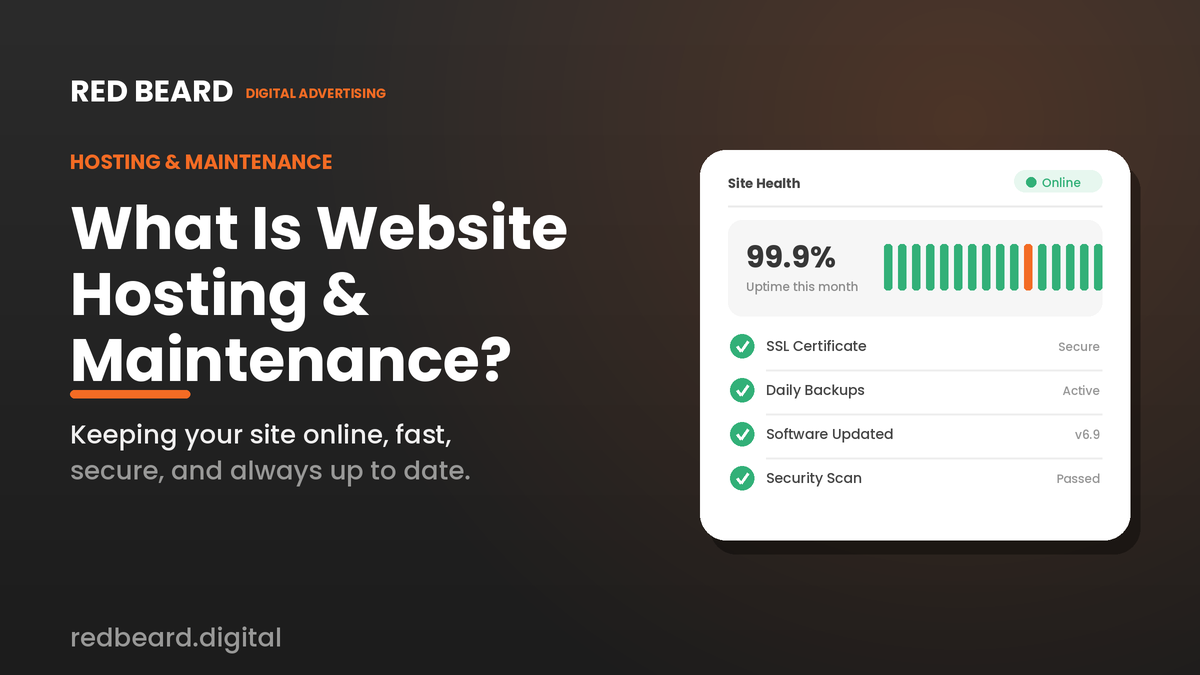
Here’s what many business owners don’t realize: a website is never truly “finished.” Software needs updates, security patches keep you protected, plugins and features need maintenance, and content should evolve as your business grows. A neglected site gets slow, breaks, or becomes vulnerable to hackers. That’s why ongoing hosting and maintenance keeping the site online, fast, backed up, and up to date is just as important as the original build.
DIY builder, freelancer, or agency?
You have options. DIY builders are cheap and quick but limited, and the work falls entirely on you. Freelancers offer more customization at a moderate cost. Agencies handle strategy, design, development, content, and ongoing maintenance as a package which tends to deliver the strongest results for businesses that want a site that actually drives growth without becoming a second job to manage.
The bottom line
Website development is the process of building and maintaining the site that represents your business online and done well, it’s one of the best investments you can make in your growth. The goal isn’t just a website that exists; it’s a fast, secure, mobile-friendly site that turns visitors into customers and keeps working for you long after launch.
At Red Beard Digital, we design, build, host, and maintain websites for local and home-service businesses fast, modern sites built to rank in search and convert visitors into booked jobs, with the ongoing upkeep handled so you never have to think about it. Ready for a website that actually brings in leads? Book a free strategy call and let’s talk about what your site could do.